
Written By: Britt’s Chimney & Masonry · Reviewed By: Will Britt, Massachusetts Home Improvement Contractor (HIC 217872)
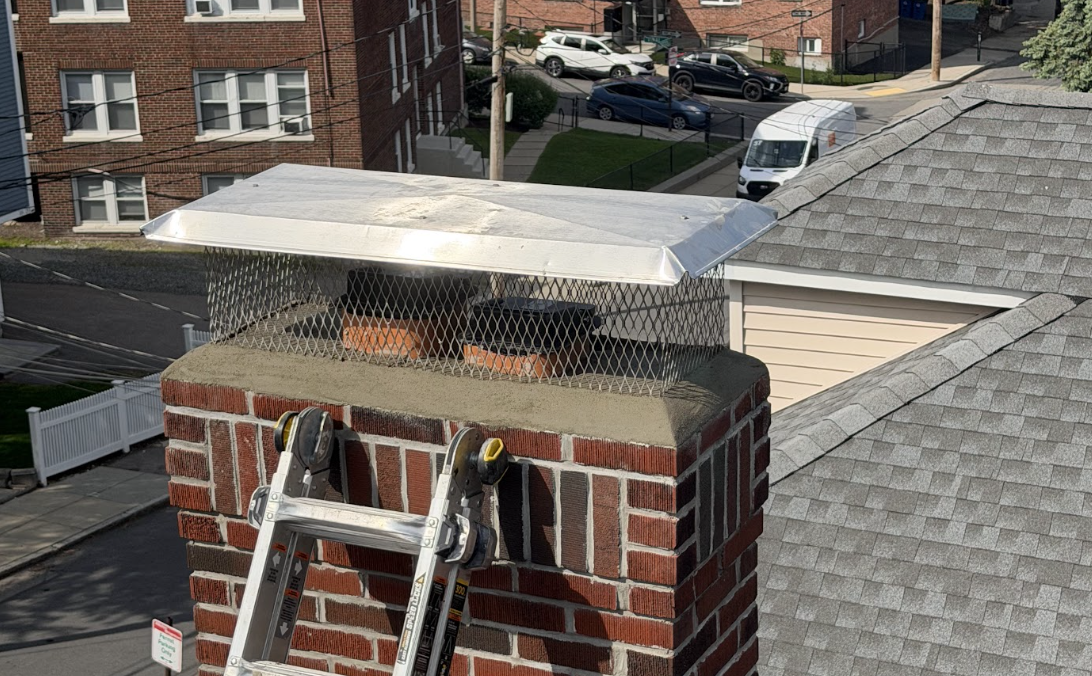
Chimney cap installation covers a flue whose cap is missing, loose, or damaged. The flue is the open channel that carries smoke out of your house. Most single-flue cap installs take about an hour on the roof. Britt’s Chimney & Masonry fits new caps and replaces damaged ones after inspecting the chimney.
Chimney Cap Installation That Keeps Rain and Animals Out
Chimney cap installation usually starts with a problem South Shore homeowners notice inside the house. A brown stain spreads near the fireplace after a coastal storm. Scratches can be heard inside the chimney every spring. Or an inspector flags the open flue during a sale.
Britt’s Chimney & Masonry installs a fitted cap to cover any opening while leaving room for smoke. Our owner, Will Britt, checks the existing cap and the surface holding it. If the trouble comes from cracked masonry or another part of the chimney, Will explains what needs fixing before recommending a replacement.
Find Out Whether Your Chimney Needs a New Cap
A quick call with what you notice is enough to tell if your chimney needs a new cap.
What Installing a Fitted Chimney Cap Includes
Installing a fitted chimney cap includes selecting the cap itself, the hardware that holds it, and a close check of the chimney top before it goes on. The flue liner (the clay or metal pipe inside the chimney that carries smoke) is measured so the selected cap fits securely.
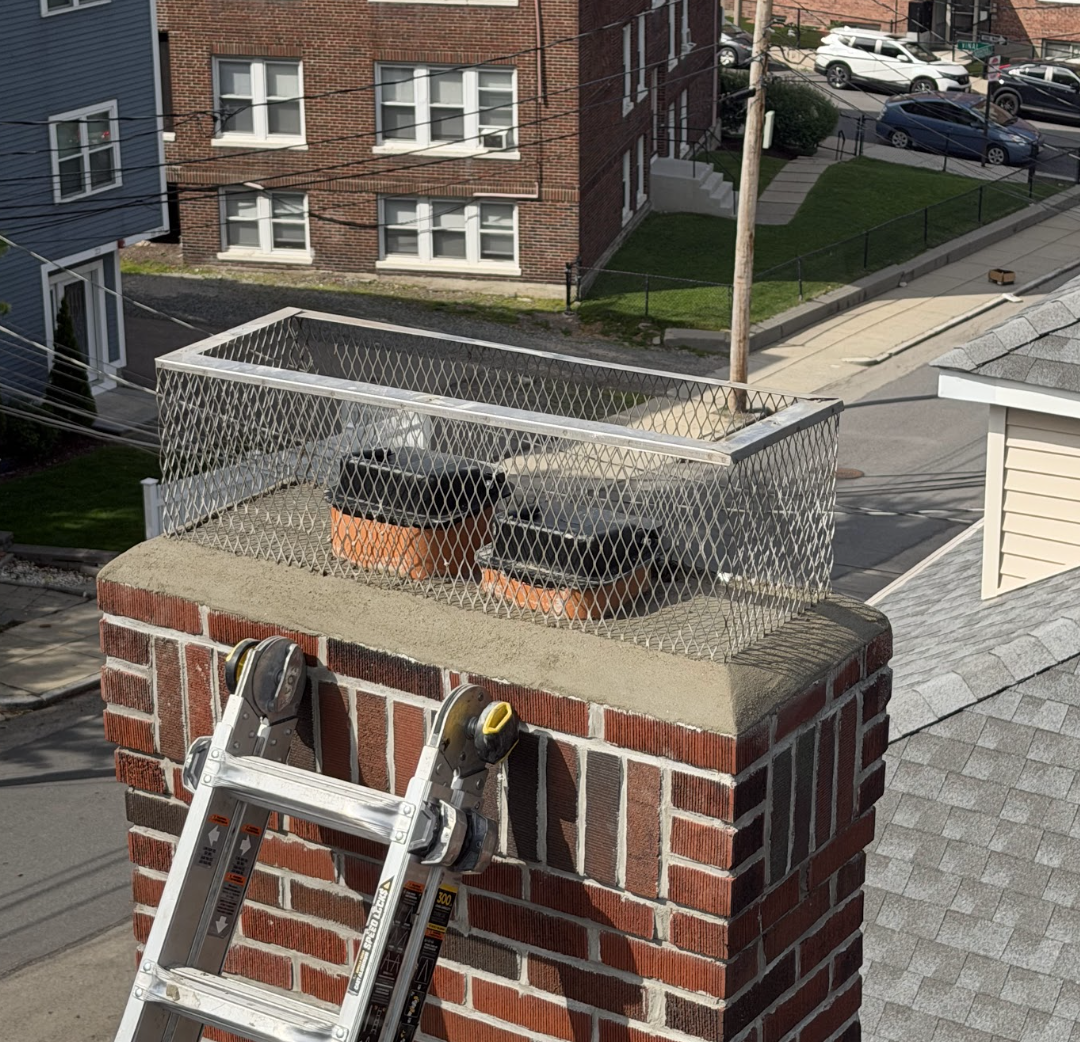
Most caps have three parts: a hood that sheds rain, a wire mesh screen that blocks animals and larger debris, and a base that grips the liner or bolts to the chimney. The chimney cap must match the flue and the fireplace or appliance below it. A masonry fireplace and a factory-built metal chimney may need different parts. Factory-built systems require caps approved for that system.
A cap installation does not include a full sweep, removing nests from deep in the flue, or masonry repairs. Cap replacement follows the same steps, with the old or damaged cap removed before the new one goes in. Chimney cap repair makes sense when only the screen is torn or a fastener is loose.
Less Water and Fewer Openings for Debris
A fitted cap stops rain from falling straight into the flue and closes the gap where leaves, nests, and debris drop in. It also breaks up the wind that pushes smoke back into your living room.
Rain and Snow Stay Out of the Chimney
An open flue catches every rain and snow storm. The hood keeps rain and melting snow away from the flue opening. That cuts moisture inside the liner and around metal fireplace parts, where repeated moisture can cause rust.
Animals and Debris Can't Get In
An uncovered flue provides a dry, sheltered spot for birds, squirrels, and bats. The mesh screen closes that opening and keeps animals and debris from entering through the chimney top. No nests or leaves pile up and choke the draft.
Sparks Stay Off the Roof
The same screen mesh on the chimney cap works as a spark arrestor, a screen that catches burning embers before they leave the chimney. It reduces fire risk on your shingles and dry leaves in the gutter.
Smoke Goes Up, Not Back Into the Room
Wind blowing across an open flue can push smoke back into your house, called a downdraft. A suitable wind cap with a hood breaks up that wind. This matters most for South Shore homes on exposed hills or near the water.
The Rest of the Chimney Lasts Longer
Most chimney damage starts with water and moisture left inside. The cap keeps it out and protects the mortar, liner, and damper. These parts go on longer without costly repairs down the road.
Weigh Your Options for a Missing or Worn Cap
A torn screen can be repaired, while a rusted-through hood usually means a new cap.
How Your Chimney Cap Is Measured and Secured
Each chimney cap installation is carefully measured to the flue liner, set level, and secured to a sound mounting surface. Most single-flue installs take about an hour on the roof.
Step 1. Measure the Flue
Will checks the flue’s shape, size, height, and nearby openings. He also checks whether the clay liner sticks up above the crown or sits flush with it. If it sticks up (called a proud liner), he measures the outside. If it's flush, he measures the inside, because the cap mounts a different way.
Step 2. Inspect and Clean the Chimney Top
He checks for nests, cracked liner tiles, and crown damage, then clears the blocked flue opening. Loose debris is cleared from the mounting area and if something needs fixing, he tells you before proceeding.
Step 3. Set the Cap in Place
The cap sits over the flue, onto the liner, or onto the crown depending on its design. Will sets it level so the hood sits at the proper height. This lets the hood shed water evenly on each side and lets the smoke escape freely.
Step 4. Tighten the Fasteners
The chimney cap is securely held in place with screws, bolts, or spring clamps at the corners. Will tightens them according to the product instructions. That locks the cap against wind without cracking the clay liner, a common do-it-yourself mistake.
Step 5. Check the Screen and the Fit
The final check covers the mounting points, screen gaps, and clearance under the hood. Will checks the mesh all the way around for gaps where a bird could fit through and confirms the hood fully covers the flue. The cap must be secured firmly and remain accessible for cleaning.
The finished chimney cap installation covers the intended openings without blocking the exhaust path.
Choosing a Cap for Your Chimney Layout
Selecting the right chimney cap depends on your chimney's layout. The number of flues, their height, and the mounting surface help narrow the options. Many older South Shore chimneys carry more than one flue.
Chimney Cap Type | What It Covers | Best For | Main Tradeoff |
|---|---|---|---|
Single-Flue Cap | One flue, held by clamps, springs, or corner screws. | Chimneys with one flue above the crown. | Each flue needs its own cap. |
Multi-Flue or Top-Mount Cap | Two or more flues under one hood, bolted to the crown. | Flues set close together. | Needs a solid, flat crown. |
Outside-Mount or Full-Coverage Cap | The whole crown and top edges of the chimney. | Water running down the outside brick. | Bigger and costs more. |
Wind-Directional or High-Wind cap | One flue, with a hood that blocks strong gusts. | Exposed roofs with smoke blowing back in. | Won't fix draft problems from other causes. |
Cap with a Top-Sealing Damper | One flue, with a top seal you open and close by cable. | Fireplaces that sit unused most of the year. | Costs more; cable needs care. |
Custom Chimney Cap | Odd-sized or crowded flues, built to measure. | Older chimneys that standard sizes won’t fit. | Longer wait time while it's made. |
A damper is the movable closure that opens or closes the fireplace’s path up into the flue. A cap with a damper must suit the fireplace and fuel used. On material, a stainless steel chimney cap resists rust and holds up well against salty air. Copper chimney caps generally cost more and are mostly picked for their looks.
What Changes the Cost of Chimney Cap Installation
The cost of chimney cap installation depends on the flue count, the cap type, chimney top condition, and what shape the current cap is in. One flue on a ranch house means a different job than three flues on a steep roof.
Number and Size of Flues: One standard flue takes a stock cap. Several flues or an oversized liner need a larger multi-flue or custom cap.
Cap Type and Material: A basic stainless single-flue cap costs less. Damper caps, full-coverage caps, and copper all carry different costs.
Roof Height and Pitch: Steep or tall roofs and hard-to-reach chimneys add setup and labor.
Removing the Old Cap: A rusted, damaged cap with seized bolts takes longer to remove than a straightforward install on an open flue.
Crown and Liner Condition: A cracked crown or broken liner tile needs to be fixed before a cap is installed. Chimney and liner repairs are separate work.
Tell us the flue count and roof height and we will give you an estimate of what the project costs. Call Britt’s Chimney & Masonry at (617) 921-9375 for a free estimate over the phone.
Owner-Led Chimney Cap and Masonry Work
Will Britt owns and runs Britt’s Chimney & Masonry, and he’s the one who measures, installs, and reviews your chimney cap. If he finds damage on the chimney top, liner, or flue, you hear it from him directly.
Britt’s is fully insured and registered in Massachusetts as a Home Improvement Contractor, HIC 217872. Chimney and masonry work carries real risk, and full insurance keeps that risk off you and your property.
Will stands behind each job, including masonry work. A cracked crown or loose top bricks won’t need a second contractor. He fixes those along with the rest of Chimney Service and Repair, then caps the chimney as part of the same project.
How Homeowners Rate Working With Britt’s
⭐⭐⭐⭐⭐
“Britt’s Chimney and Masonry did a great job on my chimney. They were very professional. They worked efficiently, kept the work area clean, and made sure everything was done perfectly. The work is top-notch, and I couldn’t be happier with the results. I highly recommend Britt’s Chimney and Masonry for anyone seeking reliable, high-quality masonry or chimney services.”
– Chase P., Verified Customer
⭐⭐⭐⭐⭐
“…William came in, provided a fair quote, and completely transformed them. He completed the work in a single day and even stayed later than expected to make sure everything was done right…”
– Bryan B., Verified Customer
Talk With Will Before Ordering a Chimney Cap
Calling before you decide on a chimney cap keeps you from ordering the wrong size.
Chimney Cap Work for South Shore Homes
Britt’s installs and replaces chimney caps for homes in Weymouth and the surrounding South Shore communities. That includes Quincy, Braintree, Hingham, Hull, Cohasset, Scituate, and Marshfield.
Exposed coastal homes and older brick chimneys take the hardest beating. That’s why Will recommends chimney caps based on their condition and layout. Measurements and sound mounting points also come first before choosing the cap finish.
Chimney Cap Installation FAQs
Can I get a price on a chimney cap without someone coming out?
Yes. Britt's gives free over-the-phone estimates, and most chimney cap jobs can be priced that way. Tell Will Britt how many flues you have, how tall your house is, and whether an old cap is up there now. Nationally, professional installs average around $300. He gives you a clear figure during the call.
How long does chimney cap installation take?
Most single-flue installs take about an hour on the roof. Multi-flue and full-coverage caps may take longer as they need to be bolted to the crown. Custom caps add a waiting time while the cap is built to the desired measurements. A damaged or old crown also needs repair before the cap goes in.
Can I put a chimney cap on myself?
No, it is not recommended to put a chimney cap on yourself. The job involves working at the top of a ladder on a steep roof. The common homeowner mistakes include buying the wrong size and cracking the clay liner while tightening the cap bolts. A loose cap can also blow off in the first strong wind.
Do I still need a chimney sweep if I have a cap?
Yes. A cap keeps rain, animals, and debris out, but it does not address the creosote, the tar-like buildup that forms inside the flue from escaping smoke. Most homes that burn regularly need a sweep once a year, and a Chimney Sweep can be booked alongside a cap check.
Can I use my fireplace if the cap is missing?
Not always. A missing cap does not tell you whether the fireplace is safe to use. Have the opening checked for nests, fallen debris, and damage before lighting a fire. If smoke enters your room, stop using the fireplace and have it checked, rather than assuming a replacement cap will solve it.
Find Out What Your Chimney Cap Will Cost
Call (617) 921-9375 for a free over-the-phone estimate on your missing or damaged cap.
You work with one person who measures, installs the cap, and tells you if your chimney needs further work. Prefer to write? You can send the details through our Contact Page.